


On April 28, 2026 the international gold price stood at around US$4,600 an ounce, having peaked above US$5,500 earlier in the year. A single ounce today fetches more than the annual income of many young people in our mining districts. While bullion analysts in London and New York raise their full-year forecasts, our rivers turn brown and the Ghana Coalition Against Galamsey warns that the fight is failing. The honest question is no longer whether galamsey is destroying us, but whether, with gold this expensive and politics this compromised, the fight can be won at all without a fundamental reset.
1. The price signal that drowns out policy
Every senior policeman, soldier, district chief executive and traditional ruler in a mining district must understand one figure. At present prices, a kilogram of gold is worth roughly two million Ghana cedis. A determined operator on an unprotected stretch of the Pra or the Ankobra can clear, in a single season, sums that would take a junior civil servant a working lifetime to earn. No amount of military rhetoric or burned excavator changes that arithmetic. Until the policy response speaks louder than the price signal, the price signal will win.
The galamsey crisis is not principally a moral failure of poor villagers. It is a market response to a commodity boom the State has refused to capture, formalise or redistribute. The young men once selling dog chains and phone chargers in Accra and Takoradi traffic have done the maths. Looking at peers in politics living lavishly in the shortest possible time, they have made the rational, if not ruinous, decision that the riverbed is their best chance.
2. What the numbers now tell us
The Ghana Water Company Limited has recorded turbidity levels of 12,000 to 14,000 NTU at intake points along the Pra, Birim, Ankobra, Tano and Offin. Our treatment plants were designed for a maximum of 2,000 NTU. Up to half of treated water is now discarded because it cannot meet national safety standards. The Water Resources Commission estimates more than sixty per cent of our water bodies are polluted, and the Coalition Against Galamsey reports forest reserves under active illegal mining have risen from 45 to at least 50, with over 9,000 hectares directly impacted, including the critical Atewa watershed.
The Church of Pentecost has now confirmed what scientists long warned. In several mining communities, traditional water baptism has been abandoned because rivers are no longer fit for sacramental immersion. When a church cannot find clean water to baptise its members, the State cannot credibly claim the fight is being won. We are months, not decades, from the scenario where Ghana imports drinking water or builds desalination plants on the Atlantic coast in the manner of the Gulf monarchies. The Institute for Security Studies and the Ghana Water Company have themselves warned of it.
3. Why the current strategy is not working
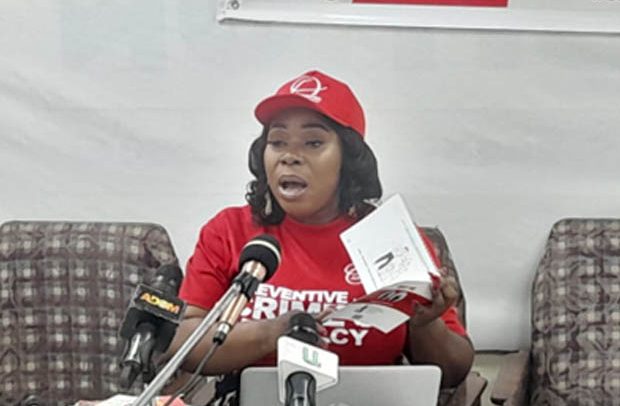
The Mahama administration has deployed military task forces, restored community mining schemes, repealed L.I. 2462, introduced excavator tracking and rolled out satellite monitoring. These are not nothing. Reclaimed forest reserves and the Cape Three Points crackdown of April 2026 demonstrate that the State retains coercive capacity. Yet, as the Convenor of the Coalition Against Galamsey has observed, action is visible while results are not. The reason is not technical. It is political.
First, enforcement is selective. When citizens see equipment seized in one district while heavily backed operations continue undisturbed in another, the State loses moral authority. Second, key provisions of the Minerals and Mining (Amendment) Act 2019 (Act 995) carrying serious penalties remain underused. Third, permanent security postings to hotspot areas have not been resourced at the budgetary level the crisis demands. Fourth, the cultural mechanism of dwan-tua, by which influential elders and politicians intervene to spare offenders, neutralises prosecutions before they reach trial. Fifth, the perception that political and traditional figures themselves finance galamsey poisons every public communication on the subject.
4. The Polity Question: Can a compromised system police itself?
There is an uncomfortable answer that must be spoken. So long as galamsey financing flows through party structures, regulatory complicity is rewarded, and prosecutions are shaped by who knows whom, no security operation will succeed. The fight cannot be won by the same political class that derives campaign finance, patronage and personal wealth from its continuation. The polity itself must be reformed before the rivers can be.
This is not a partisan observation. Both major parties have presided over the deterioration of the Pra and the Ankobra. The crisis has outlasted every administration that pledged to end it. What is needed now is an arrangement placing enforcement, prosecution and asset forfeiture beyond the immediate reach of those who benefit from the status quo.
5. A way forward: Five structural reforms
First, declare the major river basins protected security zones under statute. The Pra, Ankobra, Birim, Offin, Tano and their tributaries should be designated under emergency legislation as zones of national security interest, with permanent military and police postings, fixed budget lines, and prosecutorial jurisdiction transferred to the Office of the Special Prosecutor. Any uniformed or political officer found compromised should face mandatory custodial sentencing.
Second, formalise small-scale mining away from water bodies. The economic pressure is real and will not vanish. A serious, properly capitalised programme of registered cooperative mining, sited on geologically suitable land at a strict distance from any river, with mandatory environmental bonds and mercury-free processing, is the only honest alternative to perpetual enforcement. Ghana cannot prosecute its way out of a commodity boom; we must channel it.
Third, deploy technology at scale. Drones, satellite monitoring and AI-based change detection over the river basins, with monthly water quality data published openly, would remove the political discretion that currently shields offenders. Transparency is itself an enforcement mechanism.
Fourth, capture the gold rent for the people of Ghana. At present prices, every legitimately mined ounce should be generating significant fiscal returns. A sovereign minerals fund, audited publicly, with a fixed share ring-fenced for water infrastructure, river reclamation and youth retraining in mining districts, would convert the boom into a public good rather than a private windfall.
Fifth, reckon with the youth question honestly. The young men in our pits are not criminals by disposition. They are the unemployed of a country that has not generated the structural infrastructure, manufacturing or agricultural employment to absorb them. The cocoa industry, of which my own ancestor Joseph Crosby Annan helped lay the foundation at Aiyinasi over a century ago, is collapsing under low producer prices and ageing farms. The railways have not been built. Until we address the failure of the productive economy, every reformed galamseyer will be replaced by two more next season.
6. Conclusion: The cost of silence
The fight against galamsey is winnable, but not on the present terms. It will not be won by speeches or by burning equipment for the cameras. It will be won, if at all, by leaders prepared to disown the financing networks sustaining illegal mining, to fund enforcement properly, to formalise small-scale mining honestly, and to capture the gold boom for the public purse rather than private pockets.
The alternative is already visible in our taps and church baptisteries: importing drinking water within the decade, water tariffs that price the poor out of basic hygiene, and explaining to our grandchildren why a country exporting nearly five billion United States dollars in gold last year could not give them a clean cup to drink from. That is not a legacy any of us, in politics, in the chieftaincy or in the professions, should be willing to bequeath. The time for visible action without measurable results is over. The rivers are running out of patience. So are the people.
The writer is the immediate Past President, Ghana Institute of Safety and Environmental Professionals (2016-2022), Road Safety Advocate and traditional Ruler.
BY NANA ANNOR AMIHERE II
Follow our WhatsApp Channel now! https://whatsapp.com/channel/0029VbAjG7g3gvWajUAEX12Q
The post Is the Galamsey fight winnable? appeared first on Ghanaian Times.
Read Full Story



Facebook
Twitter
Pinterest
Instagram
Google+
YouTube
LinkedIn
RSS