


African youth have been urged to take an active role in the campaign for debt cancellation and reparatory justice, with Pan-African activists arguing that the continent’s current economic challenges cannot be separated from the legacies of slavery, colonialism and continued external control.
The call was made at an International Youth Forum on Debt and Reparations organised by the Pan-African Progressive Front (PPF) at the ISSER Conference Hall of the University of Ghana, Legon, on Saturday.
Held under the theme “Reclaiming Africa’s Wealth, Resisting Neocolonial Bondage,” the forum brought together young people, academics, diplomats and Pan-African activists to discuss Africa’s debt burden, reparations and economic sovereignty. The organisers said the forum was intended to place African youth at the centre of the continent’s struggle for economic independence.
Opening the forum, PPF Convener, Humphrey Quaye, said Africa’s debt crisis should be understood against the historical exploitation of the continent.
He argued that the wealth extracted from Africa during slavery and colonialism had created a situation in which Africans were now borrowing what he described as their own stolen wealth.
“Now they lend us our own stolen wealth and interest and call us debtors. We cannot discuss debt without discussing resetting, repair, and restitution. And we cannot discuss repair without demanding justice.”
Mr Quaye said reparations should therefore not be treated as a separate issue from Africa’s economic problems, insisting that debt cancellation was central to addressing the continent’s historical and present-day challenges.
He said young Africans were particularly affected by the consequences of the continent’s economic difficulties, including unemployment and limited opportunities after graduation.
“Today, in 2026, we are here to declare that Africa must be free from debt, free from colonial control, and pay what is owed to her,” he said.
He subsequently called on young Africans to organise across universities, communities and digital platforms and to support campaigns for national and regional reparations mechanisms.
“Today, the youth of Africa here must tell their grandparents and the former colonizers, we are here to collect, and collect we shall,” Mr Quaye said.
Ghana’s role in reparations
Director in charge of multilateral and international organisations at the Ministry of Foreign Affairs, Ambassador Francis Danti Kotia, who represented the Foreign Affairs Minister at the forum, outlined Ghana’s role in advancing the global reparations agenda.
Ambassador Kotia, the Ministry’s Coordinating Director for Multilateral and International Organisations, said Ghana had been working with the African Union and the Caribbean Community (CARICOM) to advance the reparatory justice agenda. His current official role has also been confirmed by the Ministry of Foreign Affairs.
He pointed to the adoption of United Nations General Assembly Resolution A/RES/80/250 on March 25, 2026, which recognised the trafficking of enslaved Africans and racialised chattel enslavement of Africans as “the gravest crime against humanity.”
The resolution was adopted by 123 votes in favour, three against and 52 abstentions, according to United Nations records.
Ambassador Kotia said the resolution had been followed by Ghana’s hosting of the High-Level Next Steps Conference on Reparatory Justice in June, which produced commitments aimed at moving the reparations campaign from recognition to implementation.
The June conference established three global mechanisms: a global advisory structure, a legal panel and a panel focused on the restitution of cultural heritage. The outcome of the conference also included calls for debt relief and cancellation, legal accountability, cultural restitution and reforms to global economic institutions.
According to Ambassador Kotia, developments following the UN resolution included apologies and other measures by institutions and governments in Europe, as well as moves towards the restitution of African cultural artefacts.
He cited the reported commitment by the Netherlands to return more than 2,000 artefacts to Ghana and other African countries.
Economic independence
Chairing the forum, Dr Michael Abu Sakara Foster, the Ghanaian agronomist and former Convention People’s Party presidential candidate, said Africa’s political independence had not necessarily translated into economic freedom.
Dr Sakara, argued that changing geopolitical and economic dynamics presented an opportunity for African youth to rethink the continent’s position in the global system.
He said young Africans must take advantage of the current shifts in global power to build systems that would enable the continent to exploit its own resources for its development.
He also stressed the importance of reconnecting Africa with its diaspora and creating stronger communities between Africans on the continent and people of African descent abroad.
The forum formed part of the PPF’s broader campaign on Pan-African unity, reparations and economic sovereignty.
Youth must understand Africa’s history
Speaking during a session on “Youth Role in Reparations — What Can Youth Do?”, youth advocate Theresa Boateng said young Africans could not effectively participate in the reparations struggle without understanding the continent’s history.
She said Africa’s youth, who constitute more than half of the continent’s population, had a direct stake in the reparations debate because issues such as unemployment, poor healthcare and inadequate infrastructure affected their prospects.
Ms Boateng said reparations should also be understood beyond monetary compensation.
She argued that the issue was connected to the restoration of cultural heritage, historical truth, economic justice and the dismantling of systems that continued to disadvantage African countries.
According to her, young Africans must make deliberate efforts to study the history of the continent beyond what is presented through mainstream narratives.
“Not just the history of Ghana, not just the history of Congo, not just the history of Burkina Faso, not just the history of Niger, or Nigeria, but the history of Africa. What is the true history of Africa?”
She urged young people to move beyond passive awareness and treat the reparations campaign as both a personal and collective struggle.
Ms Boateng also pointed to the March UN resolution as an important diplomatic victory but cautioned that reparations would not simply be handed to Africa.
“This struggle should let us understand that the reparations is not going to be given on a silver platter, despite the victory that we have achieved,” she said.
The post African youth demand debt cancellation, reparations at Accra forum appeared first on The Ghanaian Chronicle.
Read Full Story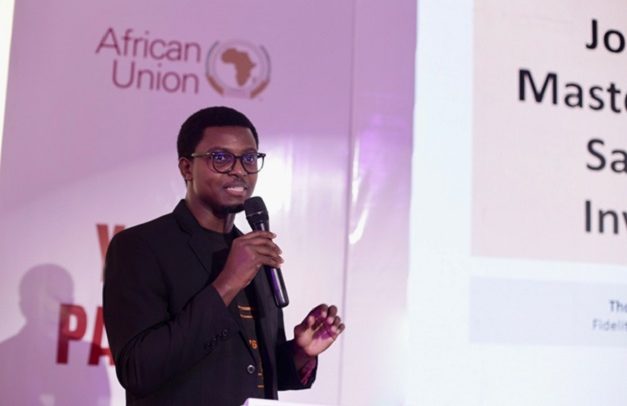



-1200x675.webp)


.jpg)


Facebook
Twitter
Pinterest
Instagram
Google+
YouTube
LinkedIn
RSS