


The Institute for Fiscal Studies (IFS) has raised concerns over what it describes as poor execution of Ghana’s 2026 Budget, warning that the government’s failure to spend GH¢35.6 billion of its planned expenditure in the first half of the year could undermine economic growth.
The IFS said while government’s efforts to stabilise the macro economy and reduce interest rates were commendable, the significant expenditure shortfall, particularly in capital expenditure and arrears payments, presented serious challenges for the economy.
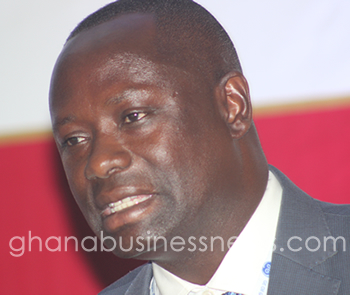
Presenting the institute’s analysis of the 2026 Mid-Year Budget Review in Accra on Wednesday, August 12, the Executive Director of the IFS, Dr. Said Boakye, said government had planned to spend GH¢172.5 billion, including arrears payments, during the first half of the year.
However, actual expenditure fell short by GH¢35.6 billion, representing 20.6% of the budgeted amount. He described the development as one of the major weaknesses of the Mid-Year Budget Review.
“The 2026 budget outturns in the first half of the year show that the budget is being poorly executed,” Dr. Boakye said.
According to him, the shortfall was particularly worrying because some of the expenditure items affected were critical to economic activity and development.
Capital expenditure, he noted, fell short by GH¢14.35 billion, representing 39.3% of the budgeted amount, while arrears payments fell short by GH¢8.64 billion, equivalent to a significant 61.8%.
Dr. Boakye explained that arrears payments were important because they provided liquidity to contractors, suppliers and businesses that depended on government payments.
“Arrears payments, for instance, oils economic activities by providing liquidity to government contractors and suppliers and the businesses that depend on them,” he said.
He further warned that continued restrictions in government expenditure could weaken economic growth because government spending constitutes a significant component of Gross Domestic Product (GDP).
“It is no wonder, therefore, that non-oil GDP growth momentum declined in the first quarter of 2026,” he said.
“Clearly, the sharp decline in government spending is at play. If the government continues to significantly restrict government expenditure as it did in the first half of the year, then non-oil GDP growth is most likely to decline further.”
Spending less is not necessarily good
The IFS cautioned against interpreting the expenditure shortfall as an automatic positive for Ghana’s fiscal position.
Dr. Boakye said although government could argue that spending less would help contain the deficit, the approach could have negative consequences if critical expenditure was being sacrificed.
“One may say, well, the government is not spending and it is good for the deficit. Not spending has its own negative implications,” he said.
“Government expenditure is a big component, a key component of GDP, and if the government is not spending, it has implications.”
The IFS said the large expenditure gap could not be fully explained by weaknesses in revenue mobilisation and foreign borrowing.
Dr. Boakye said the combined shortfall in total revenue and grants and foreign borrowing amounted to GH¢8.39 billion, which was less than one-quarter of the GH¢35.6 billion expenditure gap. Instead, he identified a substantial shortfall in domestic financing as the major factor.
“Domestic financing of the budget fell short by as much as GH¢34.45 billion, representing 67.2 percent of the budgeted amount,” he said. The IFS subsequently questioned why domestic financing had fallen so substantially when government had also been raising significant resources for the Sinking Fund.
Dr. Boakye said GH¢15.6 billion had been accumulated in the Sinking Fund by July 2026, despite the amount not being captured in the original budget in the manner the IFS believes it should have been.
He said the situation raised questions about whether government had anticipated the mobilisation of such funds when preparing the 2026 budget.
“Was the government not aware while preparing the 2026 budget, in setting its financing target, that it would raise a large amount of money for the Sinking Fund?” he asked.
“Or was it aware but chose not to capture this in the budget that it presented to Parliament?”
“Whatever the case may be, it shows poor planning on the part of the government. This has greatly affected the credibility of the 2026 budget.”
IFS attacks 4.8% growth target
The IFS also described the government’s 4.8% GDP growth projection for 2026 as unrealistic, arguing that recent economic data should have prompted an upward revision in the Mid-Year Budget Review.
Dr. Boakye noted that Ghana’s economy grew by 6.0% in 2025, exceeding the government’s earlier projection, while first-quarter 2026 GDP growth stood at 6.4%.
He said those developments provided sufficient basis for government to revise its full-year growth projection.
“This development should have informed an increase in the projected GDP growth rate for 2026 in the mid-year budget,” he said. The IFS also maintained that government’s 16.8% total revenue-to-GDP target was unrealistic, pointing to Ghana’s repeated failure to achieve similar revenue ratios in recent years.
Budget figures questioned
The institute further identified what it described as inconsistencies in the Mid-Year Budget Review figures. Dr. Boakye said the government’s stated first-half total revenue and grants target was GH¢126.14 billion, while the individual components appeared to add up to only GH¢125.4 billion, leaving an unexplained difference of about GH¢714 million.
He said the discrepancy affected the calculation of the revenue shortfall.
“If the GH¢125 billion instead of GH¢126 billion was used as a total revenue and grants target, then the shortfall in total revenue and grants outturn for the first half of the year would have been GH¢656 million instead of GH¢1.37 billion,” he said.
Small-scale gold revenue gap
The IFS also criticised government for failing to articulate a clear strategy for generating revenue from the small-scale gold mining sector.
Dr. Boakye said Ghana’s gold exports increased by 103.3% in 2025, rising from $10.31 billion to $20.98 billion, with small-scale mining accounting for about $10.8 billion, or 51.5%.
However, mineral royalties increased by only 21%. “While gold production exports increased by 103 percent, mineral royalties increased by only 21 percent,” he said.
The IFS said the development suggested that Ghana was failing to translate the rapid expansion of gold exports from the small-scale sector into corresponding fiscal revenue.
Despite the concerns, Dr. Boakye acknowledged improvements in the macroeconomic environment, particularly the sharp decline in interest rates.
He said the 91-day Treasury Bill rate had fallen from 28% in December 2024 to 5.7% in June 2026, while the average lending rate had dropped from 30.3% to 15.6% over the same period.
The IFS also welcomed the government’s decision to extend its commitment authorisation system to state-owned enterprises (SOE), saying persistent financial failures among SOEs had contributed significantly to Ghana’s debt problems.
However, it maintained that the positive macroeconomic developments should not obscure the weaknesses in budget execution, fiscal planning and revenue mobilisation identified in the 2026 Mid-Year Budget Review.
For more news, join The Chronicle Newspaper channel on WhatsApp: https://whatsapp.com/channel/0029VbBSs55E50UqNPvSOm2
The post 2026 Budget Is Being Poorly Executed -IFS appeared first on The Ghanaian Chronicle.
Read Full Story




Facebook
Twitter
Pinterest
Instagram
Google+
YouTube
LinkedIn
RSS