


By Marie-Noelle Nwokolo
When Ghana’s latest tourism figures were released, most of the attention focused on a familiar number: arrivals. In 2025, the country welcomed 1.31 million international visitors and generated US$4.34 billion in tourism receipts.
Domestic tourism also continued to grow, with nearly 1.8 million visits recorded across the country’s tourist sites.
These are encouraging numbers. They show a sector that continues to draw people to Ghana and has now moved beyond its pre-pandemic arrival levels. But buried in the same report was a telling tale: international arrivals increased, while tourism receipts declined. Average receipts per visitor fell from about US$3,743 in 2024 to US$3,320 in 2025.
The reasons are not yet entirely clear. The decline may reflect shorter stays, changes in the composition of visitors, or shifting spending patterns. Whatever the cause, the decline points to a question more important than how many people came to Ghana last year: how much opportunity did each visitor create?
For years, tourism success has largely been measured through arrivals, hotel occupancy rates and foreign exchange earnings. These indicators matter, but they tell us surprisingly little about where value is created. A tourist landing at Kotoka International Airport is not, by itself, an economic outcome. The real question is what happens next.
Where do they stay? What do they eat? Which places do they visit? Which businesses benefit? How much of their spending reaches local suppliers, artisans, transport operators, farmers and entrepreneurs?
That is why the fall in average visitor receipts deserves attention. Ghana’s challenge is no longer only to attract visitors. It is to capture more value from each person who arrives. Our history, culture, hospitality and growing international profile continue to bring travellers here. More than half of international visitors are repeat travellers. That is not a small achievement; it is, in fact, a strategic asset.
Many countries spend millions trying to persuade people to visit. Ghana has already persuaded many visitors to return. That loyalty should be put to work. Repeat visitors are more likely to go beyond the capital, stay longer, seek deeper experiences and build lasting connections.
Some may become investors, entrepreneurs, ambassadors or long-term partners. The task is to give them more reasons to spend time and money across the country and to ensure that spending reaches Ghanaian businesses and communities.
Indeed, tourism receipts do not automatically transform economies. Their value depends on what they set in motion. A hotel booking creates work for staff. A restaurant meal creates demand for food suppliers. A guided tour supports drivers, guides, artisans and local businesses. The point is not only how much visitors spend, but how much of that spending becomes income, enterprise and opportunity within Ghana.
This is where the jobs argument enters. Tourism matters for Ghana not simply because it brings people in, but because it can distribute spending across many hands. Oil brings in revenue but employs relatively few people. Mining remains important, but it is capital-intensive. Telecommunications and financial services raise productivity, but they cannot absorb large numbers of first-time job seekers.
Tourism works differently, as every visitor brings purchasing power into the economy. That is, a visitor not only pays a hotel bill but also eats, moves around, buys crafts, visits sites, uses guides, and creates demand for services. If the economic linkages are strong, that spending can travel from a hotel in Accra to a farmer in Aburi, a driver in Cape Coast, a craft seller in Bonwire or a guide in Mole.
That is why tourism should be treated not only as a visitor economy, but as a jobs and enterprise economy. In a country where nearly half the population is under 25, few policy questions are more urgent than where the next generation of workers will come from. Tourism, with its absorptive potential, offers a unique way to mop up unemployment. Yet tourism is still too often discussed as a promotional agenda rather than as a serious economic strategy.
The issue, then, is not whether tourism can support jobs because it can. The more difficult question is whether Ghana is deliberately organising the sector so that visitor demand becomes work, enterprise and local income. This is where examples from elsewhere are useful, not because they should be copied wholesale, but because they show what intentional design can look like.
One example comes from Cape Town’s V&A Waterfront, one of Africa’s most visited destinations. Businesses in the precinct worked with the Harambee Youth Employment Accelerator to connect unemployed young people with opportunities across hotels, restaurants, retailers, and entertainment venues.
Over 18 months, more than 600 young people were placed in jobs across the tourism ecosystem within an area of no more than 300 acres. It is no surprise that ~1 job is created for every 13 international tourist arrivals in the country. The lesson is not the numbers alone; it is, in many ways, the mindset.
Tourism demand was treated as a labour market opportunity, and that demand was deliberately connected to pathways into work. Ghana should ask a similar question. If more than 1.3 million visitors generated US$4.34 billion in receipts last year, how much local income, enterprise growth and employment did that spending support?
At the moment, that answer is difficult to find. We know how many tourists arrived and roughly how much they spent. We know much less about how much value stayed in Ghanaian communities, how many businesses benefited, and how many livelihoods were supported.
This is where tourism policy, enterprise policy and employment policy must meet. If job creation is one of Ghana’s central economic challenges, tourism cannot be viewed only as a sector to promote. It must also be treated as a system for creating value. That requires a different way of thinking about the sector.
A strong tourism economy should help small businesses grow, support entrepreneurship, deepen local supply chains and create routes into higher-value work. It should produce not only more workers but also more business owners, suppliers, and service providers.
Encouragingly, Ghana is beginning to build the data systems needed for this shift. The Ghana Statistical Service’s work toward a Tourism Satellite Account is an important step. For too long, policymakers have relied mainly on arrivals and receipts. The next phase must be to understand tourism’s contribution to jobs, incomes, enterprise growth and regional development. What gets measured gets managed.
Three priorities follow from this. First, Ghana should increase local value capture by more deliberately connecting tourism enterprises to Ghanaian suppliers, particularly small businesses, farmers, artisans, and service providers. Aggregating and democratising information across the tourism value chain would greatly help increase the likelihood that more tourism spending circulates within local economies.
Second, the country should develop tourism circuits that encourage visitors to stay longer, travel further and spend across multiple regions. A visitor who experiences only Accra contributes less economic value than one who also visits Cape Coast, Elmina, Kakum, Mole, Kumasi or Wli. Length of stay, geographic spread, and local spending all matter.
Third, Ghana should build clear employment pathways into tourism. Hotels, restaurants, tour operators and hospitality businesses should work more closely with training institutions and labour market intermediaries to create apprenticeships, internships and entry-level opportunities for young people.
In a country where small businesses are saddled by regulatory compliance, it would help to review and incentivize employment absorption. Tourism cannot create jobs at scale if employers and job seekers remain disconnected.
Ghana does not need to choose between attracting tourists, growing businesses and creating jobs. Done well, these objectives reinforce each other. The country’s tourism assets are well known. The strategic task now is to ensure that every additional visitor creates more value for businesses, communities and young people.
That is the tourism test Ghana should now set for itself: not simply more visitors, but more value, more enterprise and more opportunity from every visitor who arrives.
Marie-Noelle Nwokolo writes and advises on the policies and institutions that create job, attract investment and expand economic opportunity.
The post Beyond Arrivals: Ghana’s next tourism test is value, not volume appeared first on The Business & Financial Times.
Read Full Story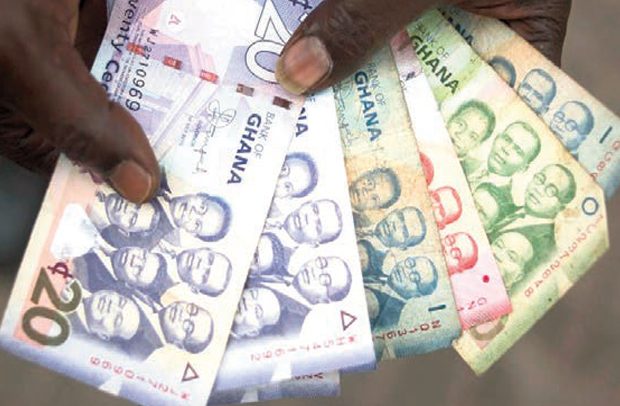








Facebook
Twitter
Pinterest
Instagram
Google+
YouTube
LinkedIn
RSS